



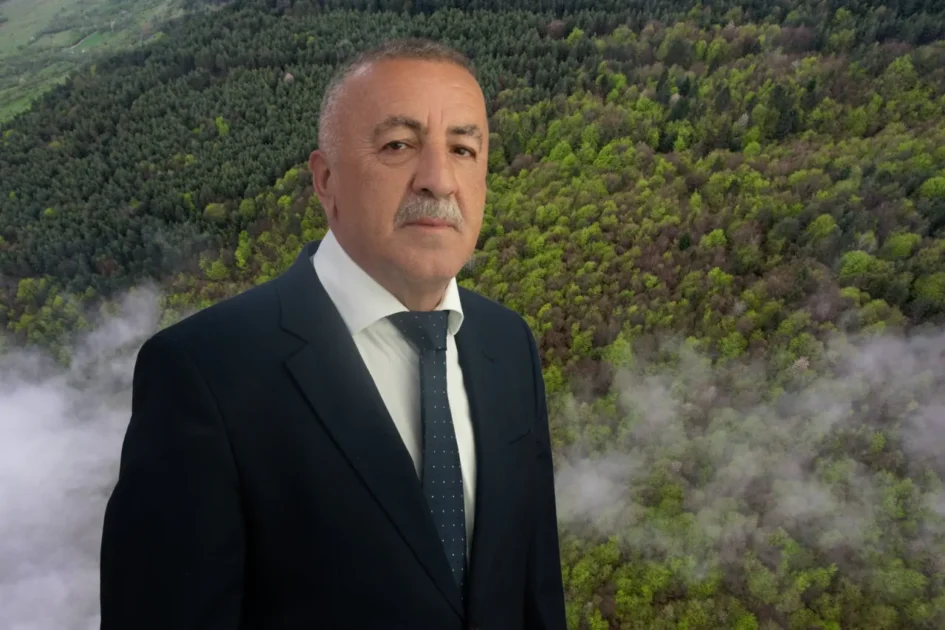
The District Court in Banja Luka has dismissed the appeal filed by the Mayor of Šipovo, Milan Kovač, and upheld the ruling establishing that he discriminated against journalists Harun Dinarević and Alena Beširević through harassment, insults, and sexually degrading remarks, thereby violating their dignity and creating an intimidating, hostile, degrading, and offensive environment.
In its judgment of 27 October 2025, the Basic Court in Banja Luka upheld the journalists’ claim, finding that Kovač had directly discriminated against them through harassment and insulting conduct that violated their dignity by creating an intimidating, hostile, degrading, humiliating, and offensive environment, according to the ruling reviewed by Buka.
The District Court upheld the first-instance decision, which was based on the testimony of the plaintiffs. The court established that Kovač had called journalist Harun Dinarević following the publication of an investigative article and, during the conversation, made a series of offensive remarks, particularly targeting Dinarević’s alleged sexual orientation. He offered to perform oral sex on him “if he was homosexual” and also made sexually degrading comments about Beširević. The court concluded that such language was anything but ordinary or appropriate for a person serving as the Mayor of Šipovo, a former member of the National Assembly of Republika Srpska, and someone who should be a self-aware, decent, and responsible public official.
“From the defendant’s statements, the court concludes that their content cannot be justified under any circumstances, not even by the anger he claims to have felt after reading the plaintiffs’ articles. The first-instance court therefore found that his speech contained all the elements of harassment as a form of discrimination, since, through numerous vulgar insults, he sought to intimidate, degrade, humiliate, and offend the plaintiffs,” the judgment states.
According to available information, this is the first final court ruling in Bosnia and Herzegovina establishing discrimination against journalists because of their professional work.
“The particular significance of this judgment lies in the fact that discrimination against Harun Dinarević was established on the basis of his presumed sexual orientation. The court thereby confirmed that protection against discrimination exists even when the perpetrator attributes a particular personal characteristic to someone, regardless of whether that characteristic actually exists,” Jovana Kisin Zagajac, the lawyer representing the journalists, told Buka.
The court emphasized that journalists act as “public watchdogs”, that public officials are required to tolerate a higher degree of criticism, and that reactions to journalistic reporting must not create fear, insecurity, or a chilling effect among journalists.
“In a democratic society, holders of public office, such as the defendant, are obliged to tolerate a greater degree of criticism, and their reactions towards journalists must not discourage them from continuing their professional activities. Any conduct that creates pressure, fear, or insecurity among journalists because of their work must be prevented, not only to protect the personality and dignity of individual journalists, but also to safeguard free public debate and the role of the media in our society,” the District Court stated.
The court further confirmed that, for harassment to constitute a form of discrimination, intent, repetition, and systematic conduct are not necessary elements.
“The judgment represents an important legal precedent and sends a clear message that homophobic and sexist insults directed at journalists because of their work are neither private disputes nor permissible reactions to media reporting, but rather constitute discrimination prohibited by law,” Kisin Zagajac said.
Beširević: The court confirmed what we had argued from the beginning
Speaking to Buka after receiving the ruling, journalist Alena Beširević said that the judgment had now definitively confirmed what the plaintiffs had maintained from the outset.
“It has been established that insulting, humiliating, and attempting to intimidate journalists is not merely unacceptable behaviour, but constitutes discrimination and an attack on human dignity. It is particularly important that the court recognised that the problem was not limited to inappropriate language, but involved a pattern of conduct aimed at humiliating and silencing journalists because of their professional work,” Beširević said.
She added that the ruling demonstrates that holding public office does not give anyone the right to insult, degrade, or attack those who ask questions and investigate matters of public interest.
“I would like to thank everyone who stood by us and believed that justice could be achieved. This judgment protects the dignity of every journalist who performs their work responsibly and in the public interest,” Beširević said.
Dinarević, who said he felt humiliated and deeply uncomfortable after Kovač offered him oral sex, expressed satisfaction that the mayor’s abusive conduct had been sanctioned by a final court ruling.
“I am pleased that the court upheld the first-instance judgment and dismissed Mr Kovač’s appeal. This precedent in judicial practice now enables our colleagues to seek legal accountability from those in positions of power who use their authority to threaten, insult, and humiliate,” Dinarević told Buka in a brief statement.
In the reasoning accompanying the judgment, Presiding Judge Nevenka Mitrić noted that Kovač had failed to prove that he had no intention of humiliating the journalists.
The court also stressed that, had Kovač believed that the allegations contained in the article “Forests of Republika Srpska in the Service of Dodik’s Financial and Political Prosperity” were inaccurate, he had legal remedies available under the Law on Protection against Defamation.
“However, under no circumstances did this entitle him to contact the journalists and harass them on the grounds of sexual orientation and gender in the manner in which he did,” the District Court concluded.
Author: Slađan Tomić
Source: Buka Magazine


