
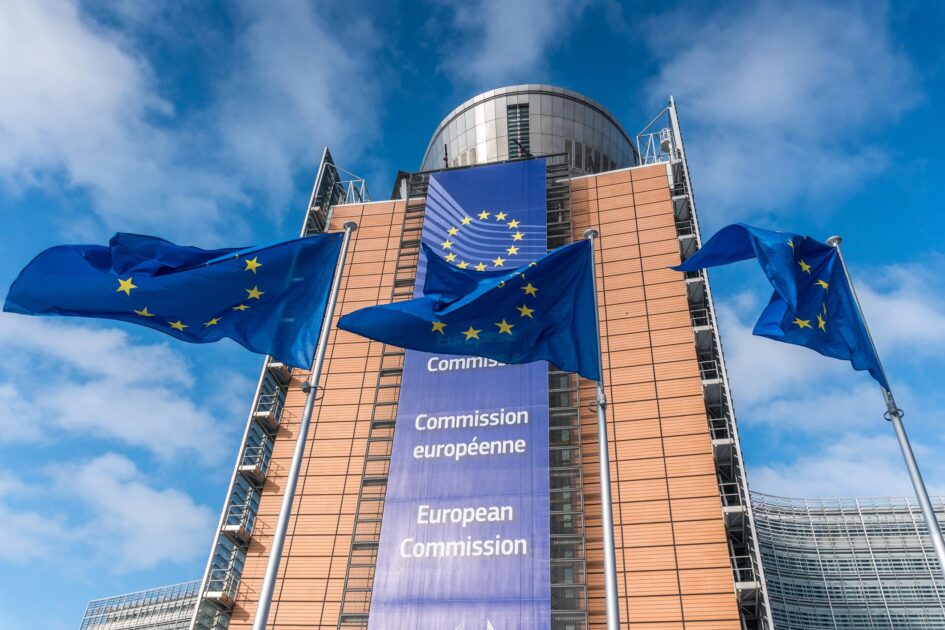
Bosnia and Herzegovina has made no progress over the past year in the areas of freedom of expression, media freedom and the protection of journalists. Media freedom in BiH is characterised by deep stagnation, accompanied by worrying indicators of a deterioration in the situation, according to the European Commission’s latest 2026 Report on Bosnia and Herzegovina.
A particularly concerning part of the report relates to political pressure, verbal attacks, intimidation and threats against journalists, especially women journalists. The Commission points out that such incidents have continued, including attacks by senior political officials, while the competent institutions continue to downplay the significance of these problems.
According to data from the High Judicial and Prosecutorial Council of Bosnia and Herzegovina (HJPC), 25 cases of attacks on journalists were registered in 2025, compared to 36 cases the previous year.
The European Commission’s report cites data from the BH Journalists Association, which received 50 reports in 2025, compared to 54 the year before. Of the total number of reported cases, 12 were concluded with court rulings in favour of journalists, including six strategic lawsuits against public participation (SLAPPs). Another 26 cases are ongoing, one of which is before the European Court of Human Rights.
The Institution of the Human Rights Ombudsman of Bosnia and Herzegovina received 20 complaints related to the media in 2025, compared to nine the previous year.
The European Commission warns that SLAPP lawsuits continue to encourage self-censorship among journalists and stresses the urgency of aligning domestic legislation with the European framework for protection against such lawsuits.
Defamation lawsuits threaten freedom of expression
Criminal penalties for defamation in Republika Srpska have a chilling effect on freedom of expression, the report emphasises. According to HJPC data, 88 criminal complaints for defamation were filed in RS in 2025. Two indictments were confirmed, and one conviction was handed down.
The European Commission also warns of the lack of political and financial independence of the Communications Regulatory Agency of Bosnia and Herzegovina (CRA). The procedure for appointing the Agency’s leadership needs to be reformed in order to limit political influence, while the existing legal framework still does not provide sufficient guarantees of its independence. Another particular problem is the absence of a legal framework that would ensure transparency of media ownership, prevent hidden concentration of media ownership, and regulate transparency in public advertising and the criteria for allocating media subsidies.
“Non-transparent and arbitrary funding of media outlets from public budgets at different levels of government, together with a decline in funding from foreign donors, remained a critical issue for media freedom, also affecting editorial independence,” the report states.
The Commission specifically points to the practice of advertising by public companies and marketing agencies linked to political parties, which continues to undermine media integrity. According to a 2025 study by the Press and Online Media Council in Bosnia and Herzegovina, as many as 60 per cent of news web portals have incomplete mastheads or none at all, meaning that basic information about ownership and editorial responsibility is missing.
Political influence over public broadcasters persists
The European Commission specifically warns of the extremely difficult situation within Bosnia and Herzegovina’s public broadcasting system, stressing that no progress was made during the reporting period in ensuring the financial sustainability of public broadcasters, including the state-level public broadcaster BHRT.
“Deprived of stable sources of funding and facing prolonged court disputes with the entity broadcasters, BHRT remains at serious risk of shutdown,” the report states.
Disputes between Radio Television of Republika Srpska, Federal Television and BHRT are still ongoing, while the authorities have failed to take steps to protect public broadcasters at state and entity levels from political influence exercised through politically controlled management boards.
The report also states that RTRS continues to disseminate Russian-influenced disinformation, including content concerning the aggression against Ukraine and Bosnia and Herzegovina’s European path. Local broadcasters funded from cantonal and local government budgets are also exposed to political pressure and influence.
“Without stable, independent and adequately funded public service media, the country cannot fulfil its basic obligations relating to media pluralism, digital transformation and democratic accountability,” the European Commission warns.
Journalism remains an insecure profession
Part of the report also addresses the extremely poor working conditions in the media sector. Journalism in BiH remains an insecure profession, characterised by low salaries and insufficient job security. Workers’ rights are, as the report states, barely respected, trade union organisation is at a low level, and there are no sectoral collective agreements for media workers.
The Commission also points out that BH Journalists and the Journalists’ Helpline recorded the highest number of journalist dismissals in a single year during 2025, as a consequence of the withdrawal of donor support.
Regarding the safety of journalists, the European Commission notes that a network of contact points has been established within prosecutor’s offices and police agencies throughout BiH, tasked with monitoring cases of threats and violence against journalists and media workers. However, the institutions have yet to ensure its full and sustainable implementation, nor have they demonstrated consistent results in their institutional handling of reported cases.
In its recommendations for the coming period, the European Commission calls on the authorities in BiH to:
- Ensure the protection of journalists and systematic institutional action in cases of threats and violence against them.
- Ensure the financial sustainability and political independence of public broadcasters, and align entity-level legislation with the state-level Law on the Public Broadcasting System.
- Adopt legislation on transparency of media ownership and criteria for public advertising.
- Ensure the decriminalisation of defamation throughout the entire territory of BiH.
The Commission additionally calls for the alignment of domestic legislation with the EU Audiovisual Media Services Directive and the European Media Freedom Act.


