


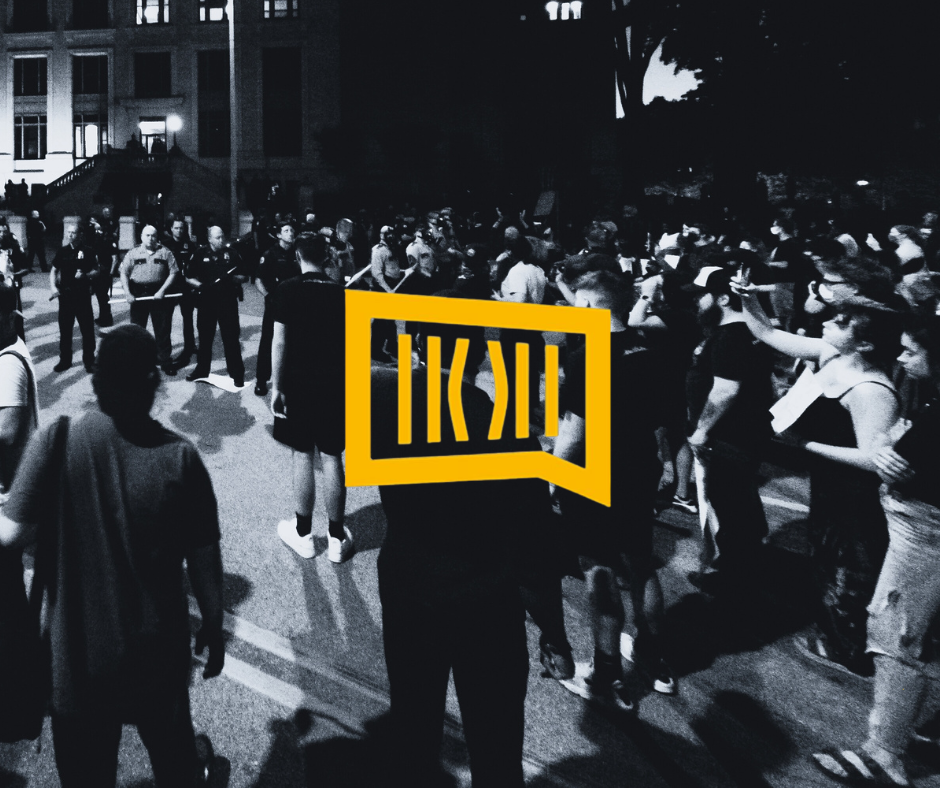
The SafeJournalists Network strongly condemns a series of threats, harassment and attacks against journalists that have occurred in recent days in Serbia, particularly during civic protests held on 16 and 17 February in Novi Sad and Belgrade. Instead of ensuring safe working conditions for media professionals and protecting citizens, the police once again failed to respond to the attacks in a timely and effective manner, while in Belgrade certain police officers pushed, insulted and assaulted journalists, using the most vulgar profanity.
These incidents represent a serious violation of media freedom and further deepen a climate of impunity that encourages new attacks. The SafeJournalists Network calls on domestic institutions to act urgently in accordance with the law, and on international institutions, first and foremost the European Union, to use all available powers and mechanisms to protect democracy, media freedom and freedom of expression in Serbia.
During yesterday’s events in Belgrade, several journalists were physically obstructed and prevented from reporting from two organised protests by students and citizens in front of Ušće Park and the First Basic Court in New Belgrade.
Photojournalist Gavrilo Andrić was obstructed twice by the police while trying to document the protests. Police officers first pushed him without any explanation while he was filming and photographing events near the park in front of the former Hotel Yugoslavia, where the construction of an aquarium is planned – an initiative opposed by citizens. At the time, Andrić had clearly displayed press identification.
Later in the evening, while Andrić was recording police actions during the arrest of demonstrators, a member of the Gendarmerie physically attacked him. When the photojournalist identified himself as a journalist, the officer walked away; however, after Andrić asked to see his identification, the officer swore at him. We emphasise that footage from the protest shows police officers using extremely vulgar insults and profanity during interventions and the detention of citizens.
A journalist from the outlet Mašina was also prevented and obstructed by police officers while filming. Student photojournalist Luka Pešić was chased twice in the evening by police officers, while Srbin Info YouTube channel journalist Nada Gladović and journalist Darko Simić were detained inside a cordon of Police Brigade officers as they attempted to film the confiscation of citizens’ motorcycles after the protest ended.
The day before, at a protest in Novi Sad, journalist Žarko Bogosavljević was attacked in front of the Serbian National Theatre, where the 200th anniversary of Matica srpska was being marked. In a video circulating on social media, Bogosavljević can be heard repeatedly identifying himself as a journalist and emphasising that he was on the ground to do his job, but this did not prevent the attacker, who was among supporters of the ruling Serbian Progressive Party, from assaulting him.
Several other journalists from Reuters, Odjek and Storyteller were in the same group and were also pushed and subjected to aggression, but Bogosavljević was the only one who received several blows. Particularly alarming is the fact that the attack took place in the presence of the police, without a timely and effective response. On that occasion, the N1 television crew was also obstructed.
Revolt magazine journalist and activist Lazar Dinić told the media that after the protest in Novi Sad he received a series of threatening messages and comments in which unknown individuals threatened to “find him” and to “tear out his heart and chop it into pieces”. Such messages constitute direct threats to life and must be urgently prosecuted.
In addition, journalist Dejana Cvetković, who reported from a protest in Surdulica on 14 February, was subjected to sexist insults, publicly singled out, warned that certain individuals had her phone number, and her profile was shared in a problematic Viber group in which calls for lynching were posted. Sexist targeting, the sharing of personal data, and calls for violence represent serious forms of pressure and endangerment, particularly when they include elements of digital violence and doxxing.
The SafeJournalists Network demands that the Ministry of the Interior of the Republic of Serbia (MoI) urgently conduct an internal review and establish responsibility of police officers who failed to protect journalists on the ground, as well as those who participated in pushing, insulting and obstructing journalists, and that the public be informed of the results.
We further demand that the MoI, without delay, establish clear operational procedures for police conduct toward media workers at public gatherings, including the obligation to actively prevent attacks on journalists and to secure safe working zones, while respecting the role of journalists working in the public interest.
We expect the competent prosecutor’s offices, including the Special Department for High-Tech Crime, to urgently identify and prosecute perpetrators of threats and online harassment, especially in cases involving death threats, calls for lynching and the sharing of personal data, and to ensure effective collection of evidence (video recordings, digital traces, identification of accounts and group administrators).
We expect the Government of the Republic of Serbia and the highest state officials to publicly and unequivocally condemn attacks on journalists, without relativisation, and to send a clear message that journalists are protected by law and that attacking them is an attack on the public interest.
The SafeJournalists Network also calls on international institutions, first and foremost the European Union, the Council of Europe, the OSCE/ODIHR and representatives of the international community in Serbia, to publicly and clearly condemn attacks and threats against journalists, and to demand swift and transparent investigations and prosecution of perpetrators.
We expect them to insist that progress in the areas of the rule of law and fundamental rights (including media freedom) be assessed through concrete results: the number of resolved cases, final convictions, and demonstrated institutional accountability. It is also necessary to strengthen monitoring and demand that Serbian authorities ensure an environment in which the media can work without fear, threats or violence, especially during protests and events of high public interest.
The SafeJournalists Network reminds that attacks on journalists, particularly in the presence of the police and without any institutional response, are an alarming signal of the erosion of standards for the protection of fundamental rights and freedoms. Journalists must be able to report safely from public gatherings, and institutions are obliged to protect them, not obstruct them.
The SafeJournalists Network will continue to document all cases of attacks and pressure against journalists and to inform domestic and international stakeholders, while insisting on accountability and an end to impunity.
Pristina – Skopje – Sarajevo – Zagreb – Belgrade – Podgorica – Tirana, February 18, 2026
Croatian Journalists’ Association
Association of Journalists of Kosovo
Association of Journalists of Macedonia
BH Journalists’ Association
Independent Journalists’ Association of Serbia
Trade Union of Media of Montenegro
The source: IJAS
Foto by: Canva


