

The position of journalists and media workers in Bosnia and Herzegovina throughout 2025 was marked by a continuous deterioration of safety, economic and professional working conditions. Although the media landscape in BiH remains formally pluralistic, with a large number of television channels, radio stations, print and online media outlets, genuine pluralism remains seriously limited. Numerous media outlets faced financial uncertainty combined with strong political pressure, which directly affected editorial independence and professional standards.
According to the World Press Freedom Index of Reporters Without Borders (RSF), Bosnia and Herzegovina ranked 86th in 2025, representing a drop of five places compared to the previous year. This result reflects an increasingly adverse environment for independent journalism, growing political pressure and threats against journalists, as well as the severely undermined economic sustainability of the media sector.
Media survival without state support
A particularly severe blow to the media landscape followed the suspension of USAID support, which led to the closure or drastic downsizing of numerous independent newsrooms. Dozens of journalists and media workers lost their jobs, while investigative journalism was further weakened. The crisis was further deepened by the sudden closure of Al Jazeera Balkans in July 2025, after 14 years of operation, leaving more than 200 journalists and media workers without employment. All of this had a strong negative impact on the overall quality and diversity of media content in the country and the region.
One of the most serious challenges facing the media scene in Bosnia and Herzegovina is the near-complete collapse of the state public broadcaster BHRT. The potential shutdown of BHRT would pose a serious threat to the stability of the country’s information system. In its 2025 report, the European Commission concluded that Bosnia and Herzegovina has made no progress in the areas of freedom of expression and the protection of journalists, while highlighting the deteriorating financial situation of public broadcasters. EU officials have stressed that a country aspiring to EU membership cannot afford to lose its public service broadcaster.
“The decline in production capacities and the weakening of media outlets’ financial sustainability have seriously jeopardized not only journalism as a profession, but also its role as a public good. At the same time, the state of Bosnia and Herzegovina has failed to take any concrete steps—no meaningful decisions have been adopted, nor has a serious debate been initiated on how and through which measures the media and journalistic community should be protected”, said Borka Rudić, Secretary General of the BH Journalists Association.
Physical Attacks and Political Pressure
According to data from the SafeJournalists Network, a total of 35 cases of attacks and threats against journalists, media outlets and journalists’ organisations were recorded in 2025, while the Free Media Help Line (FMHL) of the BH Journalists Association documented nearly 50 cases of violations of journalists’ rights and media freedoms. The most common forms of attacks included verbal threats, intimidation, harassment and political pressure. Particularly concerning is the fact that journalists and media outlets were often directly targeted by high-ranking public officials, without an adequate institutional response. In many cases, investigations remained partial or ineffective, with unidentified perpetrators or the absence of clear prosecutorial decisions, further reinforcing a culture of impunity.
During 2025, four physical attacks against journalists and media workers were reported, marking an increase compared to the previous year. These attacks most often occurred during field reporting and included attempts to prevent filming, intimidation, physical violence and deliberate damage to journalistic equipment. Although one case resulted in a court conviction, the majority of physical attacks still remain without an adequate judicial outcome.
According to data from the Media Freedom Rapid Response (MFRR) platform, 25 violations of media freedom were documented in Bosnia and Herzegovina in 2025, affecting a total of 45 media professionals and organisations. This represents an alarming increase compared to 2024, when 17 cases were recorded. The most common forms of violations were verbal threats and attacks, followed by obstruction of journalistic work, legal pressure, physical attacks and attacks on property. At the same time, the Council of Europe Platform for the Safety of Journalists issued eight alerts related to incidents from Bosnia and Herzegovina during the past year, further underscoring the continued vulnerability of journalists in the country.
Political pressure remains one of the key challenges to media freedom in Bosnia and Herzegovina. Over the past year, at least 16 cases of threats and verbal attacks by politicians and public officials against journalists and media outlets were recorded. These attacks most often manifested through public discrediting, accusations of political bias, labelling media as “enemies” or “foreign mercenaries,” and targeted harassment via social media. Statements made by politicians – often from positions of power and without any sanctions – contribute to the creation of a hostile environment for journalists and further undermine public trust in independent media. Such practices not only jeopardize journalists’ safety but also have a strong chilling effect, leading to self-censorship.
Rising Violence Against Women Journalists
A particularly concerning aspect of the state of media freedoms relates to the position of women journalists. Women in the media are frequently exposed to gender-based threats, verbal abuse and online harassment. Every fifth woman journalist in Bosnia and Herzegovina has experienced some form of gender-based discrimination within newsrooms, while threats and attacks most often occur during reporting on politically and socially sensitive topics.
In 2025, eight cases of threats and attacks against women journalists were registered in BiH, with explicit elements of gender-based violence identified in half of the cases, including sexualized threats, misogynistic hate speech and gender-based humiliation. The most common sources of threats were individuals holding public office, politicians and members of criminal networks about which women journalists reported.
Although institutional responses are often slow and inadequate, certain positive developments were also recorded. A first-instance ruling of the Basic Court in Banja Luka in November 2025, which established direct discrimination and gender-based humiliation of a woman journalist by the Mayor of Šipovo Municipality, represents an important step in recognizing specific forms of violence against women journalists. Additionally, a case involving serious online threats against women journalists and other women in public life—resulting in the arrest and detention of the suspect—constitutes a significant precedent in recognizing online violence as a real threat to security.
“It is encouraging that ten cases before courts in Bosnia and Herzegovina have been resolved in favor of journalists. Although not all of these cases originate from 2025, they nevertheless serve as an important indicator of the judiciary’s commitment to freedom of expression and to upholding the standards of the European Court of Human Rights. Another positive development is the appointment of 33 contact points within police agencies and prosecutors’ offices across BiH, with a specific mandate to record, monitor, and conduct effective ex officio investigations into all security threats and attacks against journalists”, Rudićemphasized.
Overall data and trends from 2025 clearly indicate that media freedom and the safety of journalists in Bosnia and Herzegovina continue to face serious risks and challenges. The combination of political repression, economic insecurity, weak institutional protection and impunity creates an extremely unfavourable environment for free and professional journalism.Despite the fact that a challenging period still lies ahead, the difficulties faced in 2025 have demonstrated that all stakeholders – media outlets, journalists, and state authorities alike – must seek new strategies to ensure the survival of journalism as a public good. This requires stronger solidarity, as well as sustained pressure on institutions to improve their effectiveness in protecting the rights and safety of journalists in Bosnia and Herzegovina.
Author: Maja Radević
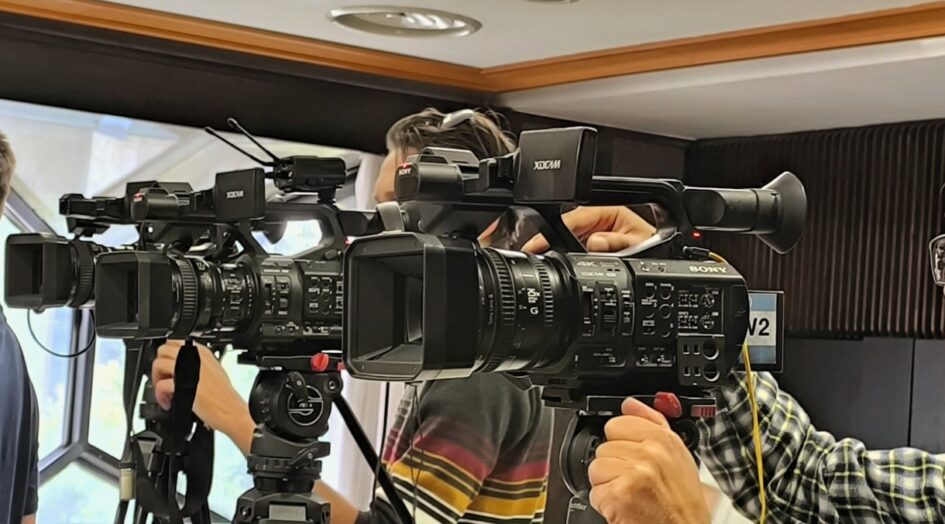
Foto: BH Novinari


